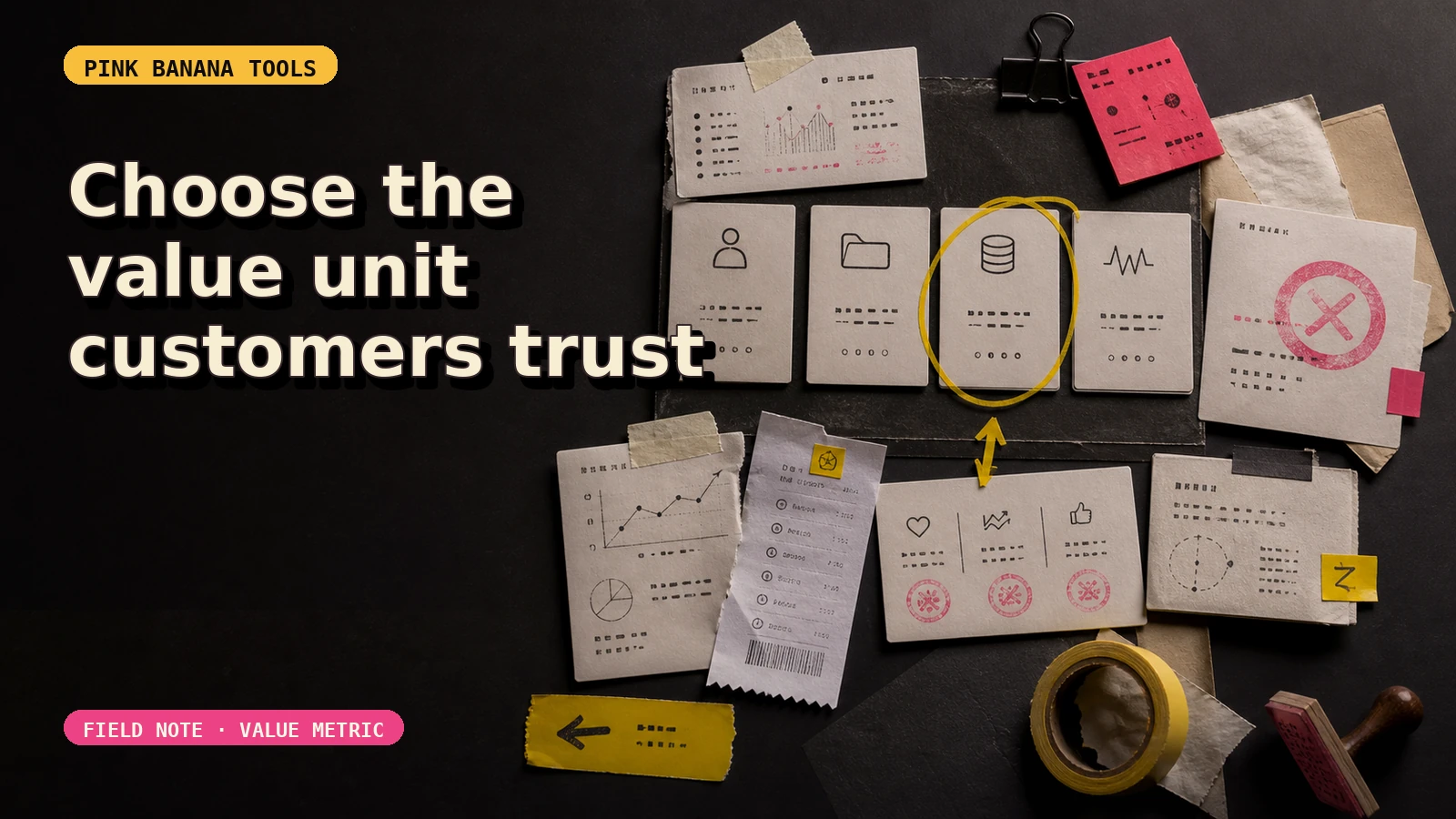
Connect the value metric, package, buyer evidence and support burden, then run price tests you can interpret.
A price is useful evidence only when a real buyer sees a defined offer and has to decide what it is worth in their situation.
Use this collection to connect the billing unit, package, access model, support burden and price test instead of choosing each one in isolation.
Price the offer as one connected system
The number on the pricing page is the last decision, not the first. A workable offer connects what the customer values, how access is packaged, what the customer is prepared to approve, and what the account costs to serve. Change one part and the others may stop making sense.
Part of the offer
Question it must answer
Warning to investigate
Value metric
Which unit grows when the customer receives more of the outcome?
The metric is easy to bill but feels unrelated to value, or the customer cannot predict it before purchase.
Packaging
Which differences belong in separate offers because they reflect distinct needs, risk or service?
Tiers are padded with arbitrary limits or features that make the right choice harder to identify.
Willingness to pay
What will this buyer approve for this problem, in this context, now?
Interest is measured through compliments or free signups while the price remains hypothetical.
Support cost
How much setup, review, recovery and ongoing help does an account require?
A small account consumes founder time that the package neither limits nor pays for.
Price test
Which uncertainty will the next offer or conversation reduce?
Several variables change at once, so a yes or no teaches you little.
Use the value metric to hold the package together
A seat can fit collaborative work. Usage can fit repeated processing. Records, locations, clients or reports may fit products where those units closely track the customer's job. None is universally correct. Check whether the buyer understands the unit, can estimate a normal bill and sees a fair reason for price to rise.
Packaging then decides which customer situations you are willing to serve. Separate offers when access, risk, workflow complexity or support genuinely differs. Do not create tiers merely to imitate a familiar pricing table. If every serious customer needs the same core outcome, a simpler package may produce a clearer conversation.
Evidence worth recording
The price and package shown to the buyer.
Who approved or rejected it, and what they compared it with.
Which limit or service term caused confusion.
The setup and support work the account actually required.
Conclusions to avoid
A single rejection means the price is too high.
A quick acceptance proves the price is optimal.
A competitor's tier should become your tier.
One margin or conversion threshold fits every product and stage.
Run price tests that leave a readable trail
State the uncertainty: price level, metric, package, trial model or service boundary.
Choose a buyer segment and keep the offer stable enough to compare conversations.
Present a real decision with the terms written plainly.
Record acceptance, refusal, delay, objections and support assumptions without treating silence as a verdict.
Change one important variable when practical, then repeat with the next relevant buyer.
Use your offer record to answer three more questions. Does the buyer need a trial or a paid pilot before committing? What support and infrastructure must the package cover? How would changed terms affect what existing customers bought?
Reconstruct a fictional SaaS invoice from retries, reversals and a usage spike, then choose a billing unit a customer can audit.
Write the next offer before debating the next price
Put the buyer, outcome, value metric, included service, limits, price and decision date on one page. Mark which part is an assumption. After the conversation, record what the buyer accepted, questioned or compared. Review the support work separately from the reaction to the number. That gives the next test a reason to exist.