Flip Coin · observed 2026-08-17
One 100-flip batch, and what it does not prove
A tally records how many heads appeared. Can it also tell you the longest run—or let you replay the draw?
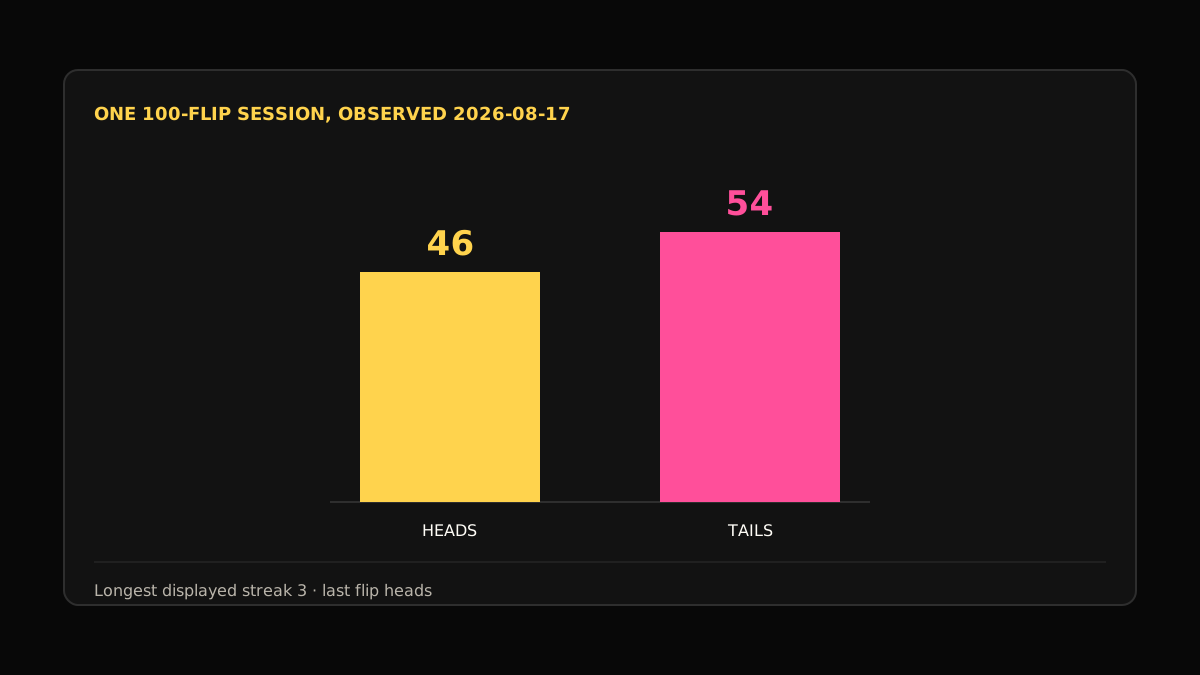
The tally tells you totals, not the order
On 2026-08-17, a batch returned 46 heads and 54 tails. A separate batch on 2026-09-13 returned 54 heads and 46 tails. The totals happen to reverse; the second run neither corrects the first receipt nor shows that the generator balances itself.
The tally gives totals, not order. Even with the last flip and a streak value, you do not have the sequence of all 100 outcomes.
- Historical observation
- 2026-08-17 · shown in the cover above
- Batch size
- 100 flips
- Heads / tails
- 46 / 54
- Last flip
- Heads
- Recorded Streak field
- 3 — not a verified longest streak
“Streak 2” describes the end of the run
The September batch ended on heads with Streak 2. In the inspected source, a matching face adds one to the streak; a different face resets it to one. The field therefore reports the current consecutive run, not the longest run in the batch.
That describes two heads at the end, but a longer run could have occurred earlier. No full sequence was retained to check a maximum. The historical field of 3 likewise remains a recorded streak value, not a verified longest streak.
- Separate production observation
- 2026-09-13
- Requested batch
- 100 flips
- Heads / tails
- 54 / 46
- Last flip
- Heads
- Displayed current streak
- 2
- Longest streak
- Not established from the retained receipt
Production browser batch, 2026-09-13: Chromium 148.0.7778.96, UTC, en-US, fresh context, reduced motion enabled; no generator substitution. Source fingerprints were unchanged before and after.
The CSV is a batch receipt, not a replay
The September CSV contained one aggregate data row with two columns: Session time and Result. The time below is the exported display time in the UTC browser context; the observation date is separate.
The result retains the batch size, totals, leading face and last flip. It exports neither individual outcomes nor the streak value. To compare future batches, keep the date with the CSV and note the displayed streak separately.
- Export observation date
- 2026-09-13
- Session time
- 03:24:47 PM
- Result
- 100 flips: 54 heads, 46 tails — heads lead; last flip heads
- Data rows
- 1 aggregate batch row
- Individual outcomes in order
- Not included
LIMIT A replay or longest-run check requires an ordered event log. This row cannot supply one.
Exactly fifty-fifty is possible
Under an ideal model of 100 independent flips, each with a heads probability of one half, an exact 50/50 split is possible. Count the ways to place 50 heads among 100 positions, then divide by the number of equally likely ordered sequences.
The binomial coefficient counts those arrangements; it does not require heads and tails to alternate. This is a probability for one exact tally, not a promise that every batch ends close to equal. Independence and the one-half probability have not been established for the site’s output by these observations.
7.958924%
Ideal-model probability of exactly 50 heads
P(H = 50) = C(100, 50) / 2100C(100, 50) = 100! / (50! × 50!)
Theoretical calculation, 2026-09-13, rounded to six decimal places in percent. Assumes 100 independent trials with p = 1/2.
LIMIT A theoretical probability, not a measured rate from this website.
Which generator produced the draw?
The disclosure recorded on 2026-08-17 named crypto.getRandomValues when available, with a time-mixed Math.random fallback. It does not identify which branch generated that batch. The September inspection explains the streak update, but does not trace the RNG branch for either run or audit its entropy. Neither these receipts nor a balanced tally provides independent RNG certification.
Casual, reversible choices
A flip can settle who starts a casual game. A procedure that requires an auditable draw needs more than these receipts.
LIMIT Not for gambling, certified draws or official procedures requiring auditable randomness.
For a casual choice, agree what heads and tails mean before drawing. Do not keep flipping until the preferred answer appears; decide in advance how the result will be used.